May Plant of the Month – Eastern Redbud
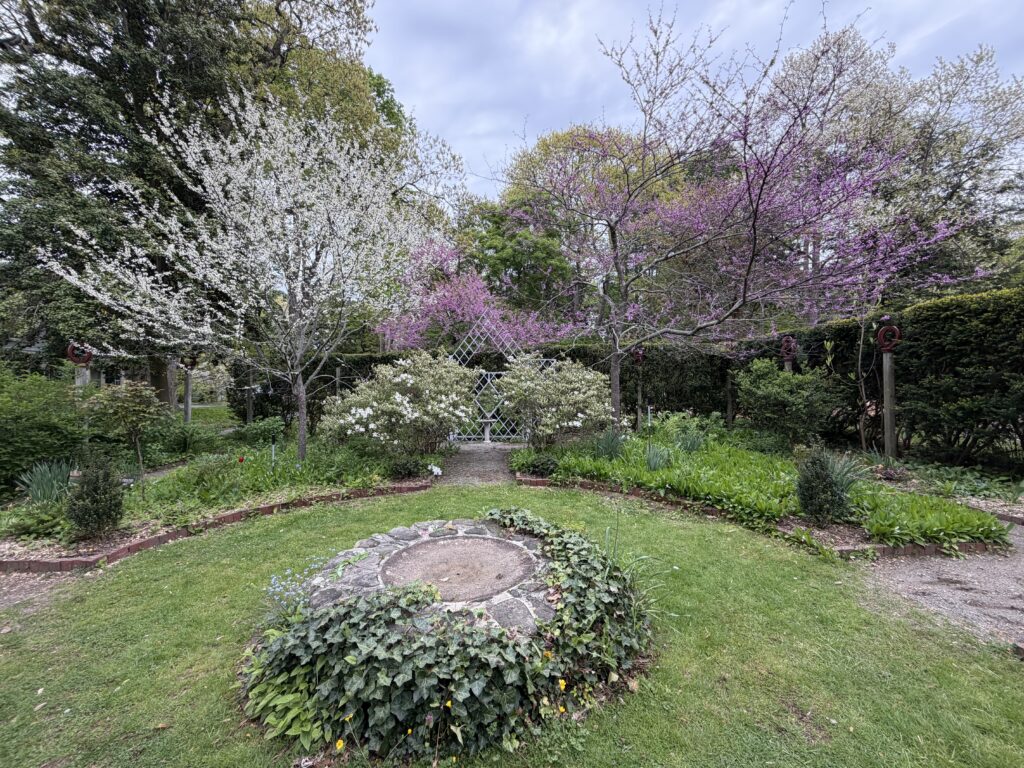
Cercis canadensis, or Eastern redbuds, are noted for their profuse, brightly-colored flowers in early spring. The flowers are particularly showy as they bloom along the stems of the tree before the leaves come out. At the arboretum, there is an abunance of stight species redbuds and cultivars. This includes ‘Flamethrower’, ‘Alley Cat’, ‘Forest Pansy’, ‘Royal White’, ‘Vanilla Twist’, ‘Black Pearl’, and ‘Midnight Express’. Two of the original cultivars Polly kept in the collection are ‘Forest Pansy’ and ‘Royal White’. ‘Forest Pansy’ has bright pink blooms, and ‘Royal White’ has white blooms. These blooms are a source of nectar for hummingbirds, bees, and several species of butterflies. Redbuds are typically understory trees in the wild, but Polly planted them in the hot summer garden where they thrived for many years. The trees were replaced in 2015 when the Front Garden was renovated and this spring the redbuds were stunning. Redbuds produce prolific seed pods and are known to self-sow. Here at the arboretum, there are volunteers of both the white and red redbuds throughout the garden.
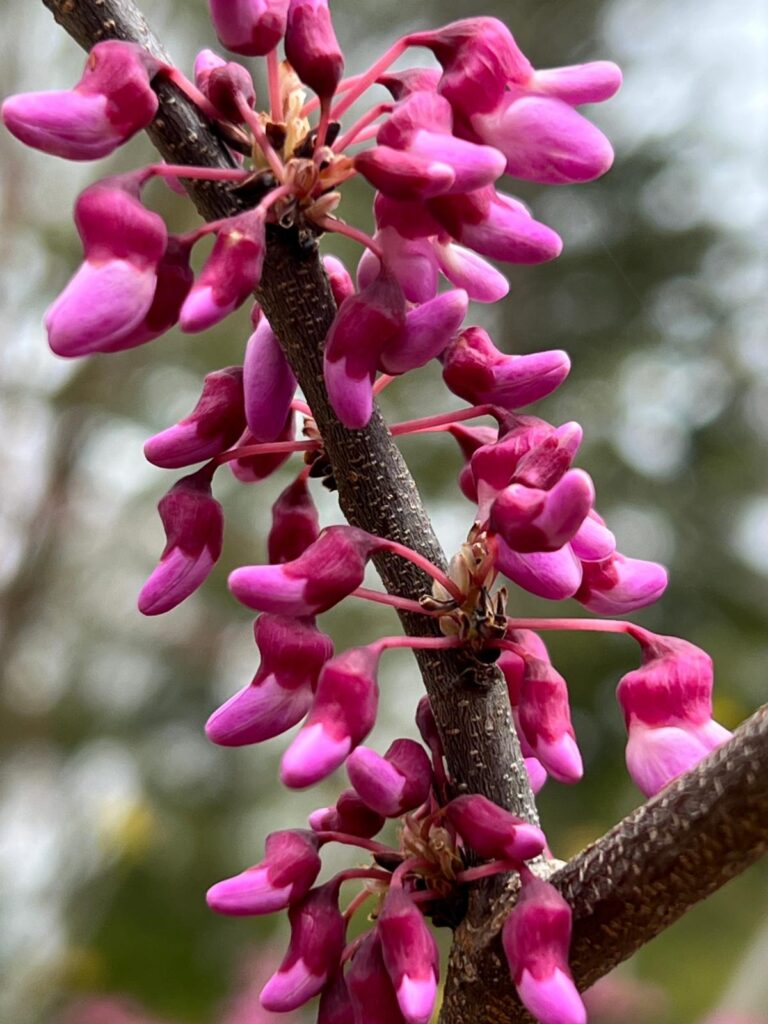
Fabaceae or Leguminosae, commonly known as the legume, pea, or bean family, is a large and agriculturally important family of flowering plants. Redbuds are a member of this family. This family includes trees, shrubs, perennials and annual herbaceous plants. The young flowers of the redbud are edible, full of vitamins and are quite tasty, resembling the flavor of peas. The flowers can be sprinkled into a salad, used as a garnish, or even baked into cookies or cakes. The young leaf and flower buds can also be added into a stir fry, salad, or even lightly sautéed with other greens as a vegetable side dish. The long seed pods, when young and purple, can also be harvested from the tree. These make a great addition to a stir fry, or when finely chopped, they can be added to dressings and dips.