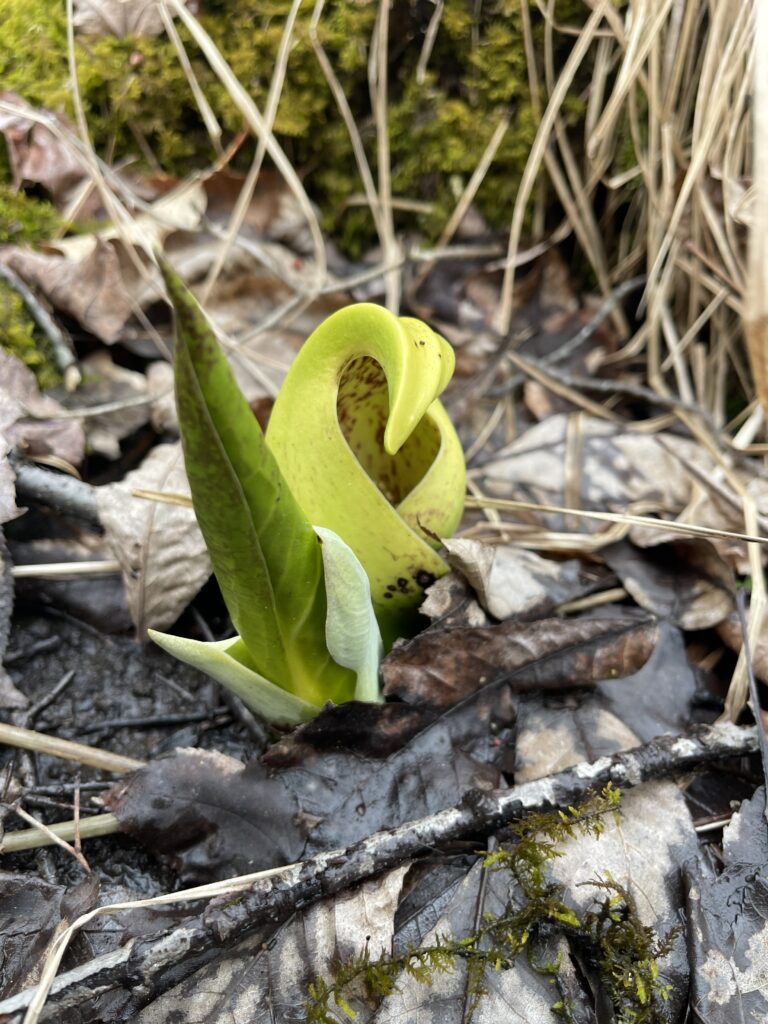
March Plant of the Month – Skunk Cabbage Symplocarpus foetidus
While hiking along a stream or wetland on a warm March day, you may stumble upon a swath of green and purple fleshy flowers. They may not look like a flower at first glance, but once you get a closer look, you can see the inflorescences within the hooded spathe. These flowers are a part of skunk cabbage (Symplocarpus foetidus) are the first flowering spring ephemeral wildflower in New England. The common name comes from the plant’s smell. The flowers have a strong smell that attracts carrion-feeding pollinators, such as flies and gnats, but bees and beetles have also been recorded visiting these smelly flowers.
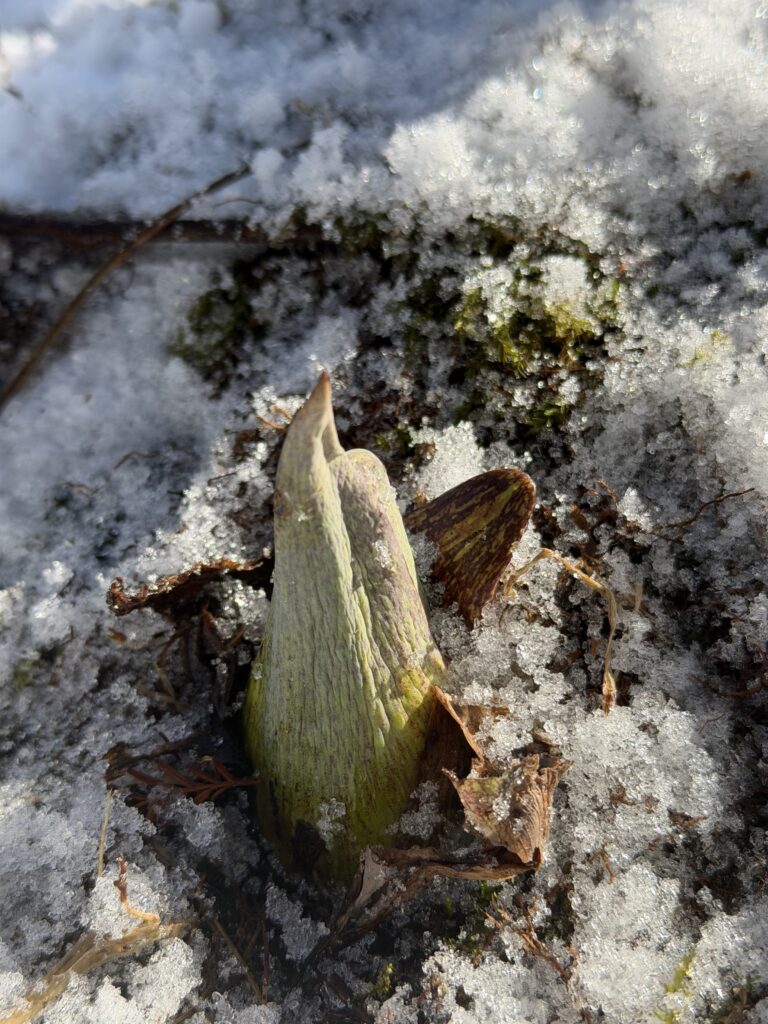
The photo above features a leaf and flower bud of the skunk cabbage taken on February 26th under 30 inches of snow. The leaf buds of the skunk cabbage emerge in the late fall. As the days get longer and warmer in the spring the flower bud begins to emerge. One of the adaptations the plant has developed is thermogenesis, the ability to produce heat. Thermogenesis is when a rapid cell respiration creates heat from the transfer of energy. Sknk cabbage can maintain 68F within the spathe. The heat the plant is producing helps to keep it from freezing in the unpredictable spring temperatures but also volatizes the fragrance of the plant.
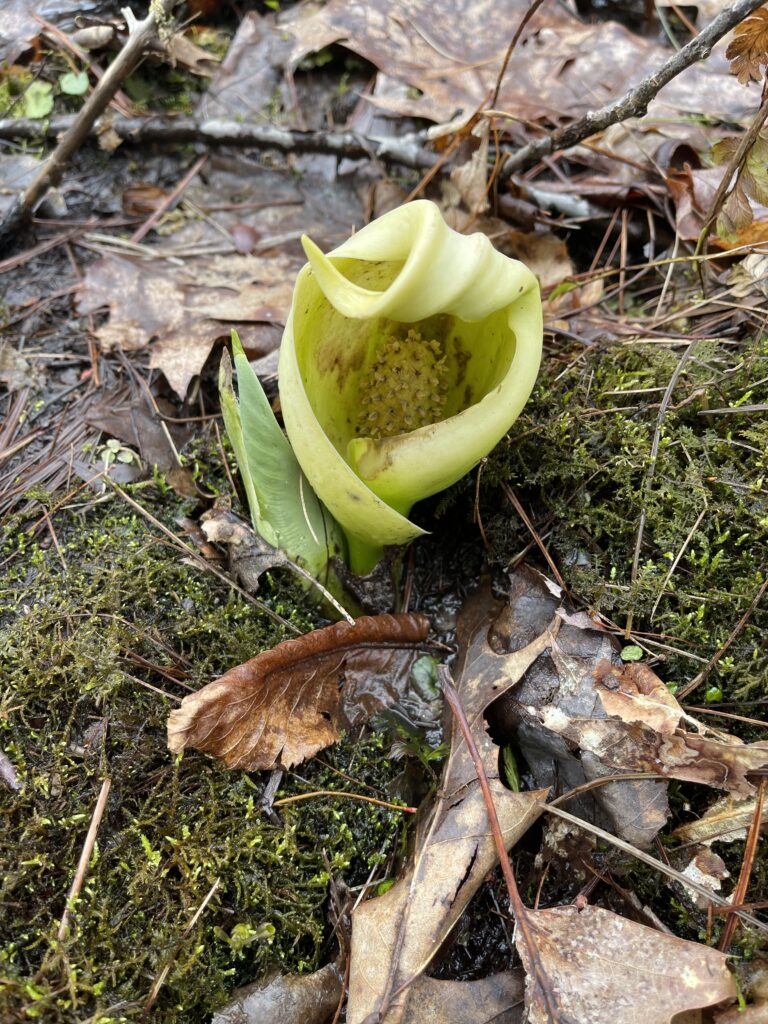
Open flowers within the spathe, a modified leaf that protects the spadix and flowers.
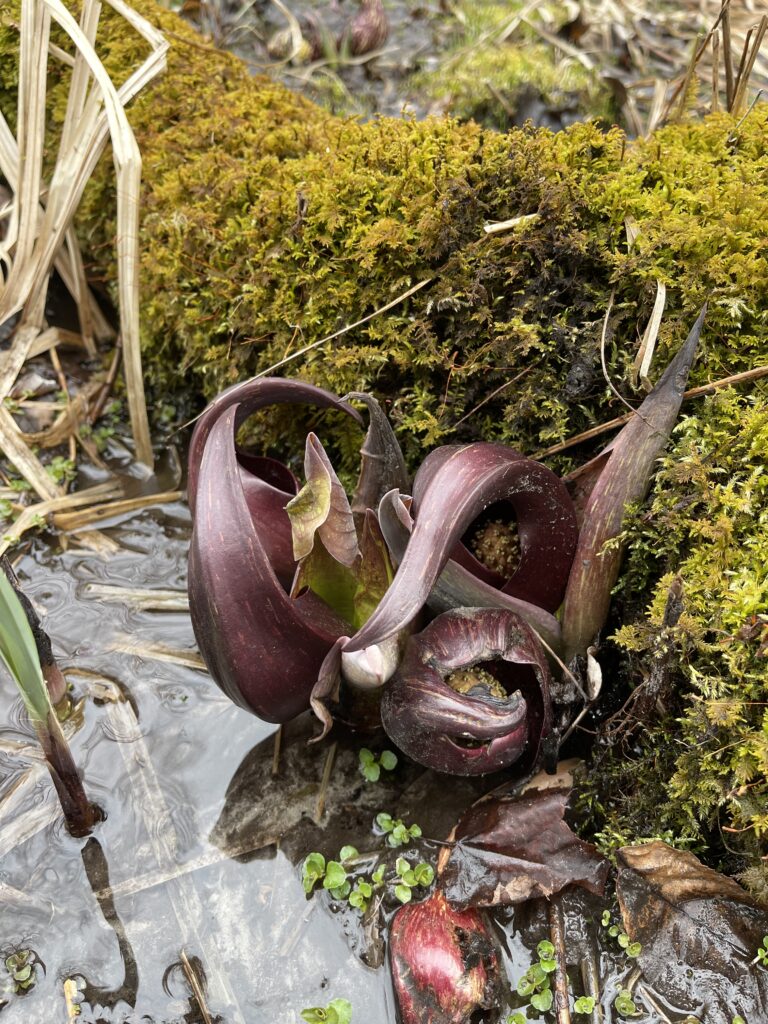
Skunk cabbage spathes can come in a range of colors from all green to purple, and speckles in between.